Choosing a Pet GPS Tracker: 5 Key Specs and Cost Comparison
Losing a pet is the thing every pet-owning household fears most. A small GPS collar can make the difference when it matters. But products range from tens of yuan to over a thousand, and the spec sheets are confusing. How should you actually choose?
1. Battery life: at least 7 days, longer is better
A tracker that needs frequent charging is a nightmare. Mainstream products run 1–3 days in real-time mode, and 7–14 days in smart power-saving mode. Choose a product that lasts at least 7 days in power-saving mode, so you are not constantly removing the collar to charge it — which is exactly what makes pets resist wearing it.
| Use case | Suggested battery life | Notes |
|---|---|---|
| Daily walks in the city | ≥ 5 days | Charging at home every day is acceptable |
| Suburban or rural free roaming | ≥ 10 days | It cannot be flat when the pet goes missing |
| Multi-pet households | ≥ 7 days | Reduces charging frequency |
2. Positioning accuracy: ≤10 m outdoors, with indoor assistance
GPS + BeiDou + cell-tower positioning is the baseline. In open environments error should be 5–10 metres, enough to tell whether the pet is inside the compound or on the road. Cell-tower-only positioning is poor (500 metres or worse) and not recommended.
If your cat or dog frequently goes into basements or stairwells, choose a model with Wi-Fi-assisted positioning — indoors it can resolve the floor.
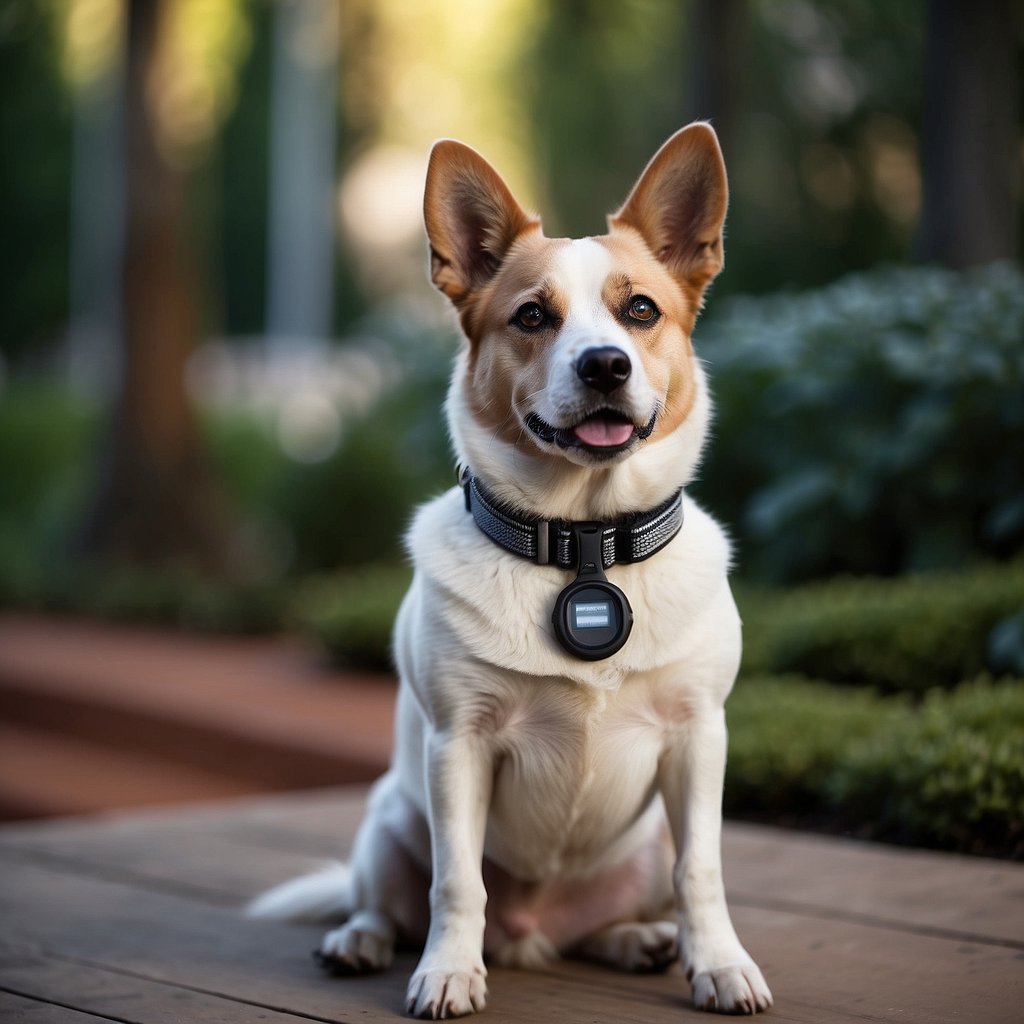
3. Waterproofing: IP67 as the starting point
Pets get rained on, step in water and sometimes swim. IP67 (1 metre for 30 minutes) is the minimum. Also check that the collar's interface is waterproof; the charging port design matters — magnetic charging is more reliable than contact pins.
4. Geofencing: alert the moment the pet leaves
Draw a virtual fence around the home and the tracker pushes a phone notification as soon as the pet leaves it. That matters far more than searching afterwards — the faster the alert, the higher the chance of recovery.
According to statistics from domestic pet-rescue platforms, the chance of recovery is about 60% within the first hour and drops sharply to 20% after 24 hours. An instant alert is the golden hour.
5. App experience and subscription: do not ignore hidden cost
An app that stalls or refreshes slowly at the critical moment is fatal. Check the app-store rating (4.5 or above) and how often it is updated.
The subscription trap: many GPS collars are cheap to buy but require a data plan (roughly RMB 10–30 per month) to work. Work out the three-year total before buying:
| Type | Hardware | 3-year subscription | Total cost |
|---|---|---|---|
| Low-cost hardware + monthly fee | RMB 99 | RMB 360–1,080 | RMB 459–1,179 |
| Mid-to-high-end hardware + annual fee | RMB 299 | RMB 240–480 | RMB 539–779 |
Choosing by dog size
· Small dogs and cats (≤10 kg): pick a lightweight model ≤30 g with a collar width ≤2 cm, otherwise the pet resists it
· Medium dogs (10–25 kg): the widest choice; mainstream products all fit
· Large dogs (≥25 kg): can carry longer-life models, including dual collar-and-harness mounting
Safety reminders
A GPS collar carries no radiation risk in itself (transmit power is far below a phone), but note the following:
· Do not let the pet chew the housing
· Check collar tightness regularly (two fingers should fit underneath)
· Remove the battery when the device is not used for a long period to avoid humidity damage
GPSAI's pet tracking solution supports collars from multiple brands, and the app manages several pets at once — suitable for multi-pet households.